
We bought intent and assigned it by accident!
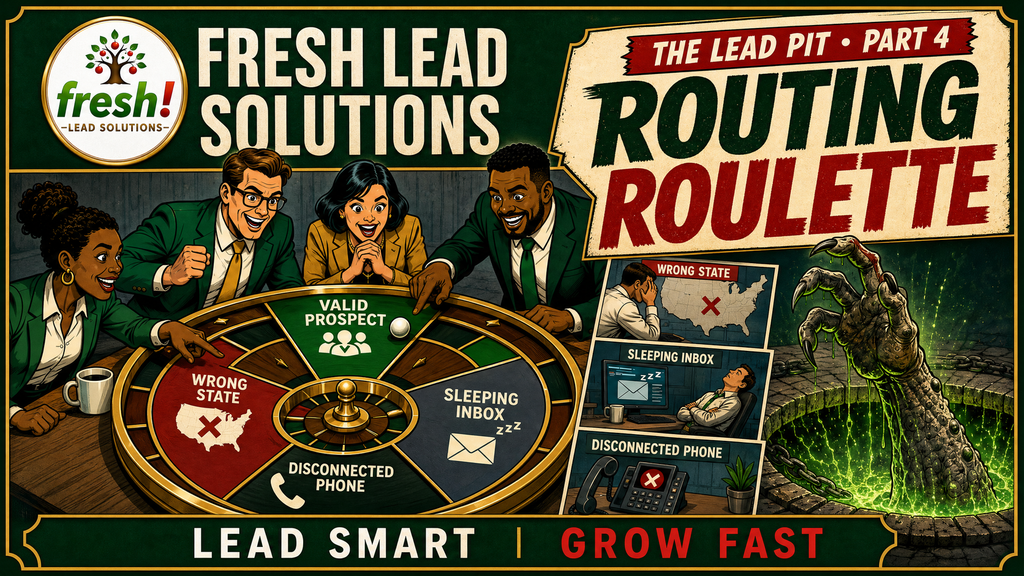
We bought intent and assigned it by accident.
The lead was qualified, reachable, and ready. We sent it to the agent who was offline, unlicensed for the market, and already buried under seventeen older records.
I found out about it two days later when I pulled the assignment log and asked the routing lead to walk me through it.
“Why’d this one go to him?”
“He was next in the queue.”
“He’s not even licensed in that state.”
“The queue doesn’t check for that. It just rotates.”
“So a ready-to-buy lead sat in a folder he couldn’t legally touch, for two days, because it was ‘his turn’?”
He didn’t have a better answer than that.
The dashboard later classified the lead as unresponsive. The roulette wheel kept its job.
Quality can die in transit
Lead value is not fixed at purchase. Delay, mismatch, queue depth, geography, product fit, skill, capacity, and contact rules change what the record can become. I tried explaining this to an agency owner who insisted his system was fine because “the lead was good when we bought it.”
“It was good when you bought it,” I said. “Was it still good four days later, after it sat in a queue?”
“It’s the same lead.”
“It’s the same data. It’s not the same opportunity. Somebody else called that person by now. Their situation changed. Maybe they already bought something. The lead didn’t get worse because it’s cursed — it got worse because nothing moved it while it still mattered.”
He went quiet, then asked how long his own leads typically sat before assignment. Neither of us had that number yet.
Salesforce reported in 2026 that 98% of surveyed marketers encountered personalization barriers and highlighted fragmented or poor-quality data. The study is broad marketing research, not an insurance-routing benchmark, but it supports the underlying point: context that cannot move through systems cannot personalize an experience. [1]
Fairness is not sameness
Equal distribution sounds fair until one agent receives work they cannot legally, practically, or competently handle. I got pushback on this once from a manager who prided himself on “treating everyone the same.”
“Everybody gets leads in the same rotation. That’s fair.”
“Is it fair to send a D-SNP-heavy lead to an agent who’s never sold D-SNP?”
“They’ll figure it out.”
“Or they’ll fumble it, the client gets a worse experience, and the agent gets blamed for a mismatch nobody set them up to handle.”
“So what, I play favorites?”
“No. You match opportunity to readiness. That’s not favoritism. That’s just paying attention to who’s actually in a position to do something with what you’re handing them.”
He didn’t love the answer, but he stopped calling it “fair” after that conversation.
The FLS aspiration
I want routing rules I can explain, exceptions I can audit, and feedback that distinguishes source failure from assignment failure. I said this out loud once in a planning meeting, and someone asked the obvious follow-up.
“Can you actually explain your current routing rules? Right now, off the top of your head?”
I couldn’t, not fully. That was the moment I stopped treating routing as a settled, invisible part of the pipeline and started treating it as something that needed the same scrutiny as the leads themselves. The right lead should not need luck after we paid for judgment.
Continue the story
Next: The Quality Score That Ate Its Own Evidence.
Sources and scope
[1] Salesforce, State of Marketing 2026
Published facts are cited and qualified. First-person observations, metaphors, and satire are commentary—not universal claims. This article is education, not legal, tax, compliance, financial, or insurance advice.
See what your own pipeline looks like once it’s actually scored. Start the audit at freshleadsolutions.com
Continue The Lead Pit series at blog.freshleadsolutions.com
Leave a Reply